
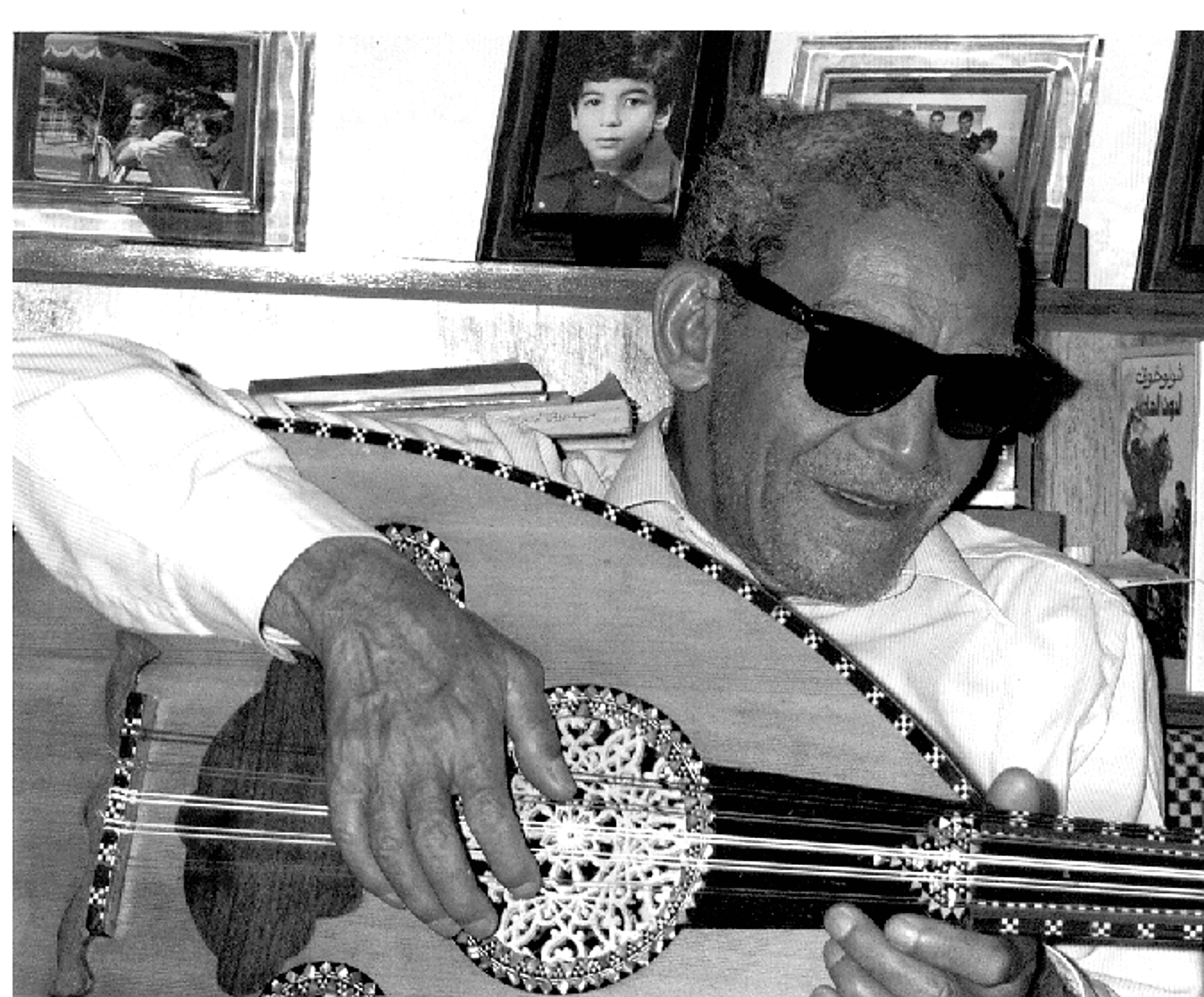
Sheikh Imam is an iconic musician and singer, whose songs left a lasting impact on Arab culture in his time and beyond, primarily through a formidable partnership with the well-known poet Ahmed Fuad Negm, as well as through collaborations with more than 35 poets, including Fuad Qaoud, Adam Fathi, Zein Al Abdeen Fuad, Mahmoud al Tawil, and Sayid Hegab. Sheikh Imam sang about resistance, revolutions, class struggle, freedom, and belonging, often infused with dark humour in addressing grave and serious matters. His voice powerfully captures people’s grievances, and calls on listeners to sing, raise their voices, take action, and resist injustices. It is no wonder that his songs were recalled to collective imagination during the Arab Spring, in Egypt, Tunisia, Lebanon and across the Arab world.
The journey of Sheikh Imam started from a small apartment in Cairo, with poet Ahmed Fuad Negm, where their collaboration and singing attracted a small circle of friends, slowly growing into a phenomenon. As Imam recalled, “While we were working, our friend Saad El-Mogy would come to attend the melody composition. Then after that, another came with him, then another, and another, and the songs began to move beyond the confines of the house into the street”.
from 8:16
The duo's songs gained traction as journalists like Fahmy Hussein began writing about them, amplifying their voices beyond their immediate circles. The turning point came in 1968 when they performed at the Journalists' Syndicate in Cairo—a concert described as “exploding like a bomb”. This event not only solidified their reputation as critical voices against the official narrative but also marked the beginning of their music’s widespread circulation. Following this concert, recordings of their songs began to be smuggled out of Egypt.
The rise and spread of Negm and Imam’s songs were due to contextual and inherent features in their work. Contextually, their work started gaining prominence in a historically landmark moment following the 1967 defeat and its shattering impact on Egypt and the Arab world. Over the following decades, they became the voice of movements and mobilisation, amplifying demands for accountability and justice, and pointing fingers at corruption and oppression, frequently paying a heavy price of years from their lives spent in prisons.
Inherently, their work is not simply about poetry or communicating political messages that strongly resonate with the audience, it also creates unique artistic experiences through Imam’s creative and unique performance and the participatory nature of their work. Imam used “chanting, preaching or oratory shouts of enthusiasm and admiration, whispers of disapproval, and winks of blame and rebuke”, and the experience of the songs was inherently participatory, creating a powerful sense of camaraderie, belonging and collective solidarity.[i] As Booth said about Negm and Imam’s songs, “this is poetry not to be heard in silence, and not in the first instance to be read individually, but rather meant for choral response and involvement ... It means – is meant as – action”.[ii]
Come join us in the Sheikh Imam Club to hear the poetry and sing the songs, not in silence or individually, but in collective participation with others, creating a civic space and a community to which all can belong.
If you want to know more about Imam and Negm, browse our Digital Library Traces of Imam.
[i] Fūʾad Zakaria, “Hawl Zaheret al-Shaykh Imam,” Majalet al-Fan w Al-Fikr al-Mo’aser 153 (1995): 70–77.
[ii] Marilyn Booth, “Exploding into the Seventies: Ahmed Fūʾad Negm, Shaykh Imam, and the Aesthetics of a New Youth Politics,” in I Say My Words Out Loud (Prince Claus Fund, 2008), 72.